Free Trial Practice Questions

Explore every domain tested on your Scuba Conquer. Expand each section to see the subtopics you need to master.
Applies fundamental gas laws to diving with enriched air nitrox mixtures up to 100% oxygen.
Covers the physiological limits, risks, and tracking methods associated with high oxygen partial pressures.
Explores the mechanics of decompression, tissue compartments, and modern decompression algorithms.
Focuses on calculating gas consumption, reserve requirements, and utilizing dive planning software.
Details the hardware requirements, cleaning standards, and analysis procedures for high-oxygen gas mixes.
Outlines the practical skills, buoyancy requirements, and standardized protocols for switching to decompression gases.
Addresses how to manage equipment failures, missed decompression, and physiological emergencies underwater.
Test your knowledge with these free preview flashcards. Click a card to flip and reveal the answer, then use the arrows to navigate through the deck. Upgrade for the complete flashcard set covering every exam topic.
Get All FlashcardsWhat is the IANTD recommended maximum working partial pressure of oxygen (PO2) for the bottom phase of a dive?
Click to flipThe maximum recommended working PO2 is 1.4 ATA.
A higher PO2 of up to 1.6 ATA is strictly reserved for the resting decompression phase.
What is the formula to calculate the Maximum Operating Depth (MOD) in meters?
Click to flipMOD = ((Maximum PO2 / FO2) - 1) x 10.
To find the pressure in ATA first, divide the target PO2 by the Fraction of Oxygen (FO2).
What is the primary risk of exceeding a PO2 of 1.6 ATA?
Click to flipCentral Nervous System (CNS) Oxygen Toxicity.
Symptoms can occur suddenly and include visual disturbances, ear ringing, nausea, twitching, and convulsions.
At what oxygen percentage does IANTD require scuba equipment to be explicitly O2 cleaned and compatible?
Click to flipAny mixture containing more than 40% oxygen.
While 40% is the standard threshold, some local regulations or manufacturers may require O2 cleaning for anything above 21%.
What is an Oxygen Toxicity Unit (OTU)?
Click to flipA measure of pulmonary oxygen toxicity equivalent to breathing 100% oxygen at 1 ATA for one minute.
It is also known as a UPTD (Unit Pulmonary Toxic Dose) and tracks long-term, whole-body oxygen exposure.
What does the acronym EAD stand for and what does it calculate?
Click to flipEquivalent Air Depth; it calculates the depth at which breathing air would have the same partial pressure of nitrogen as the Nitrox mix being used.
EAD is primarily used to apply air decompression tables to Nitrox dives.
What is the Maximum Operating Depth (MOD) for EAN50 at a PO2 of 1.6 ATA in meters?
Click to flip22 meters (which is 3.2 ATA).
Calculation: ((1.6 / 0.50) - 1) x 10 = 22m. This is a common decompression gas depth.
What is the Best Mix formula used to determine?
Click to flipIt determines the highest fraction of oxygen (FO2) that can be safely used at a specific target depth for a desired PO2.
Formula: FO2 = Target PO2 / Depth in ATA.
Name the two main types of oxygen toxicity of concern to Advanced EANx divers.
Click to flipCentral Nervous System (CNS) toxicity and Pulmonary (Whole Body) toxicity.
CNS is acute and related to depth/PO2, while Pulmonary is chronic and related to time/exposure.
What does the acronym CONVENTID stand for regarding CNS oxygen toxicity?
Click to flipConvulsions, Visual disturbances, Ear ringing, Nausea, Tingling/Twitching, Irritability, Dizziness.
It is an essential mnemonic to remember the early warning signs and symptoms of a CNS hit.
In the IANTD Advanced EANx course, what is the maximum oxygen percentage a diver is certified to use for decompression?
Click to flipUp to 100% Oxygen.
The course qualifies divers to use air or Nitrox up to 40% for the bottom phase, and mixes from 50% to 100% O2 for decompression.
What is the concept of Accelerated Decompression?
Click to flipSwitching to a gas mix with a higher oxygen percentage during ascent to increase the off-gassing rate of inert gases.
This safely shortens the overall decompression time compared to remaining on the bottom gas.
Why is personal gas analysis critical before an Advanced EANx dive?
Click to flipTo confirm the exact FO2 of the breathing gas to accurately calculate MOD, plan decompression schedules, and prevent oxygen toxicity.
The diver who will breathe the tank must personally analyze and sign the fill log.
What are the depth and decompression time limits for an IANTD Advanced EANx Diver?
Click to flipMaximum depth of 40 meters (132 feet) with up to 15 minutes of mandatory decompression.
This certification serves as the foundational entry point into technical diving.
How must a stage or decompression cylinder be labeled for safety?
Click to flipIt must be clearly marked with the Maximum Operating Depth (MOD), the gas mix (FO2), the analysis date, and the diver's initials.
The MOD should be written in large numbers along the side of the cylinder so it is easily visible to the diver and their buddies.
What is the Oxygen Window (Inherent Unsaturation)?
Click to flipThe pressure gradient created by the body metabolizing oxygen, which allows for faster off-gassing of inert gases during decompression.
Breathing higher concentrations of oxygen during deco increases this gradient, speeding up nitrogen elimination.
What is the standard safety protocol when switching to a high-oxygen decompression gas at depth?
Click to flipVerify the depth is at or above the MOD, identify the cylinder, confirm the gas switch with a buddy, and verify the regulator before breathing.
Following a strict gas-switch protocol prevents the fatal mistake of breathing a high-PO2 gas too deep.
How does using Nitrox instead of air affect the risk of Nitrogen Narcosis according to modern technical diving standards?
Click to flipIt is generally considered to have the same narcotic effect as air at the actual depth.
IANTD teaches that Oxygen is effectively as narcotic as Nitrogen, so the narcotic depth remains the same despite a lower EAD.
What is RMV (Respiratory Minute Volume) and why is it important for Advanced EANx?
Click to flipRMV is the volume of gas a diver breathes per minute at the surface; it is crucial for accurate gas planning and ensuring sufficient reserves for decompression.
It is often used interchangeably with SAC (Surface Air Consumption) rate, though RMV measures volume and SAC measures pressure.
What happens to the CNS clock during a surface interval?
Click to flipThe CNS oxygen toxicity percentage decreases (decays) over time as the body recovers from high partial pressure oxygen exposure.
The half-life of CNS oxygen toxicity is generally considered to be 90 minutes.
You've reached the end of the free preview. Unlock the full deck with all 200+ flashcards covering every exam topic.
Get Premium AccessExplore the interconnected concepts you need to master for your exam. This free preview reveals the breadth of topics covered. Upgrade to unlock the full mind map with every concept, sub-topic, and study pathway mapped out.
Get Full Mind MapMaster your Scuba Conquer with the top study resource on the market
Get All Practice Questions
Gain unrestricted access to practice questions anytime and anywhere you require. Scuba Conquer operates effortlessly across all mobile devices, laptops, and electronic gadgets.
Get All Practice Questions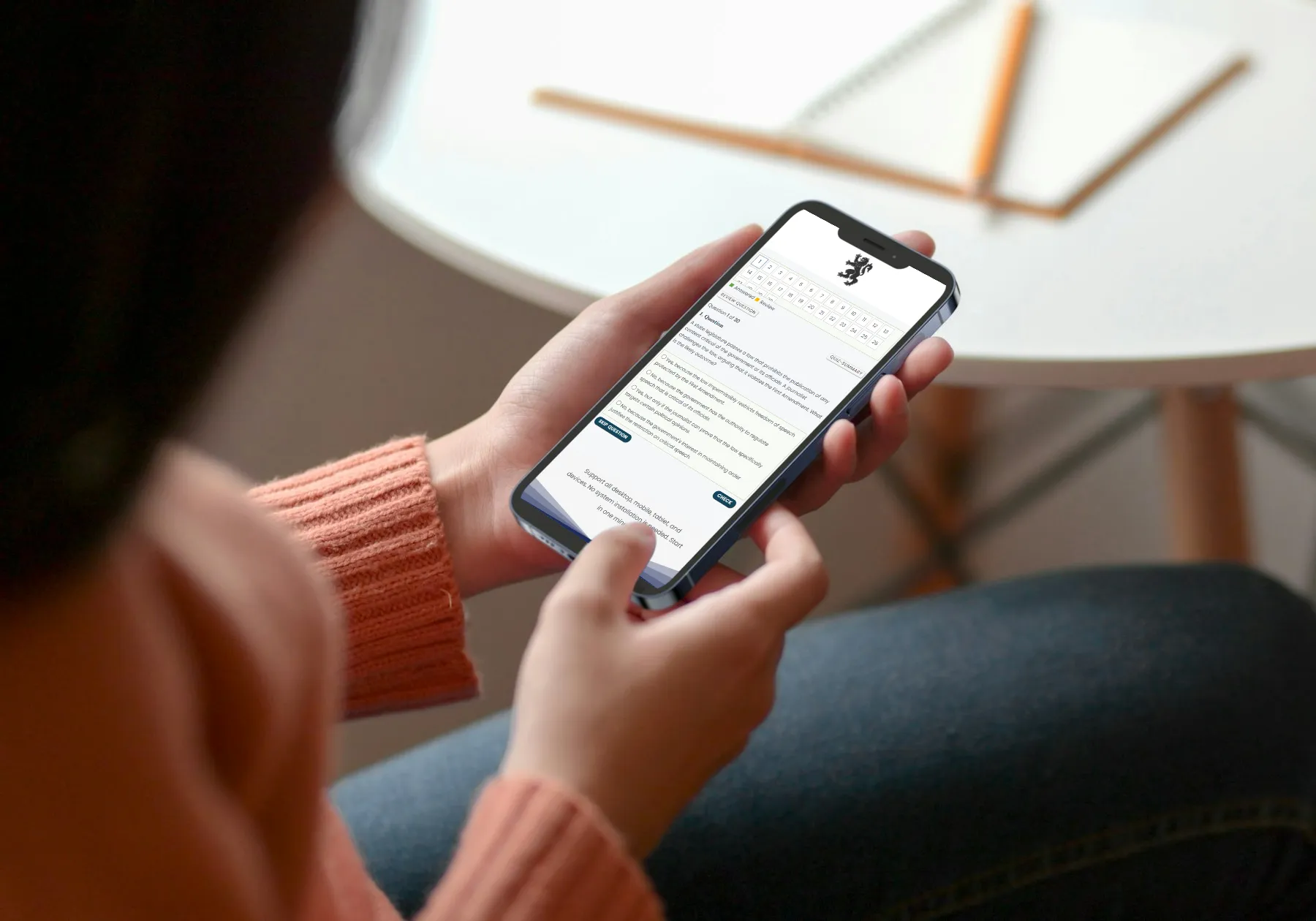
Every practice question, study note, and mind map is carefully crafted to help candidates like you conquer the Scuba Conquer with ease.
Get All Practice Questions
Reinforce your learning with premium video study notes that cover the most critical topics for your Scuba Conquer. Watch, review, and retain — at your own pace.
Get All Study Materials
Scuba Conquer comes with a 100% success guarantee, but we go even further. We don’t just want you to pass; we want you to excel. Picture your colleagues' faces when they see your new professional credential on LinkedIn. Think about how much easier your next promotion will be when you have the certification to back it up.
Here’s our iron-clad promise: if you don’t pass the exam within one year, we’ll extend your full access completely free of charge — no questions asked, no hoops to jump through, and no proof required. Study at your own pace knowing that you’re fully covered.
Whether life got busy, you need extra time to prepare, or you simply want another round of practice — we’ve got you. Your success is our reputation, and we’re putting our money where our mouth is with this unconditional free extension guarantee.
Our practice questions are meticulously designed to replicate the real Scuba Conquer experience. Every question comes with thorough explanations, clarifying why the correct answer is accurate and why the other choices fall short.
Secure instant access once your payment is confirmed. You will promptly receive full access to a wide range of study materials, featuring practice questions, study guides, and detailed answer explanations.
If you do not obtain Scuba Conquer certification after utilizing our platform, we will prolong your access at no additional cost until you succeed, valid for one year from the date of purchase.
Scuba Conquer is crafted to function seamlessly across all devices. Study with ease on smartphones, tablets, iPads, and computers using our flexible platform design.
Our questions mirror the format and challenge of the Scuba Conquer while adhering to ethical guidelines. We respect the copyrights of the official body and create unique content that promotes genuine understanding rather than simple rote learning.
An official invoice will be emailed to you immediately after your purchase. This invoice will contain your contact information, details about the product, the payment amount, and the date of the transaction for your records.
Our past candidates love us. Let's see how they think about our service
Grateful for Scuba Conquer for their exceptional resources. The study materials were thorough and straightforward. Their emphasis on practical examples helped me grasp Scuba Conquer concepts effortlessly.
As a full time professional, Scuba Conquer adaptable study approach was ideal. The mobile application allowed me to study while commuting. Their extensive question bank is impressive.
I used to feel overwhelmed by the Scuba Conquer, but Scuba Conquer turned studying into a manageable and even enjoyable experience. I truly appreciate this resource.
Just completed my Scuba Conquer with the help of Scuba Conquer. The practice questions were tough yet reasonable. The thorough explanations clarified the reasoning behind each response.
Scuba Conquer transformed my preparation into an enjoyable experience. The engaging quizzes and real-world case studies kept my interest high. The performance tracking tools were invaluable.
Preparing for the Scuba Conquer felt daunting until I discovered Scuba Conquer. Their organized strategy and weekly study schedules helped me stay focused. I aced the exam with flying colors.
Join thousands of successful professionals who have enhanced their careers using our platform.
Enable Premium Access