Free Trial Practice Questions

Explore every domain tested on your Scuba Conquer. Expand each section to see the subtopics you need to master.
Setup, maintenance, and handling of technical diving equipment including backplate/wing, twinsets, and stage cylinders.
Advanced application of gas laws and understanding the physiological effects of breathing compressed gases at depth.
Calculating gas requirements, tracking consumption, and planning for safe reserves during technical dives.
Understanding decompression models, using dive planning software, and executing accelerated decompression schedules.
Mastery of fundamental technical diving skills, precise buoyancy control, trim, and propulsion techniques.
Identifying, managing, and resolving critical in-water emergencies and equipment failures safely.
Managing psychological stress, mitigating task loading, and executing effective communication within a technical diving team.
Test your knowledge with these free preview flashcards. Click a card to flip and reveal the answer, then use the arrows to navigate through the deck. Upgrade for the complete flashcard set covering every exam topic.
Get All FlashcardsWhat is the 'Rule of Thirds' in technical diving gas management?
Click to flipIt dictates using one-third of your gas supply for the outbound journey, one-third for the return, and keeping one-third in reserve for emergencies.
Essential for overhead environments and technical dives to ensure sufficient gas for you and a buddy to safely exit.
What is the generally accepted maximum operating depth (MOD) PO2 limit for the bottom phase of a technical dive?
Click to flipThe standard maximum PO2 for the bottom phase is 1.4 ata to minimize the risk of Central Nervous System (CNS) oxygen toxicity.
During the decompression phase while at rest, the PO2 limit is typically pushed to 1.6 ata to accelerate off-gassing.
How does Dalton's Law apply to calculating Maximum Operating Depth (MOD)?
Click to flipDalton's Law states that total pressure equals the sum of partial pressures, allowing divers to calculate MOD by dividing the target PO2 by the fraction of oxygen (FO2) in the gas.
Formula: MOD (in ATA) = Target PO2 / FO2. Convert ATA to depth to find your physical limit.
In decompression software, what does a Gradient Factor setting of 30/85 mean?
Click to flipGF Low (30) dictates the depth of the first deep stop at 30% of the M-value, while GF High (85) allows surfacing when tissue tension reaches 85% of the M-value.
GF Low controls the depth of initial stops; GF High controls the safety margin upon surfacing.
What is the primary purpose of an isolator valve on a twinset manifold?
Click to flipIt allows a diver to separate the two cylinders in the event of a catastrophic gas leak, preserving the remaining gas in the intact cylinder.
Closing the isolator is a crucial step in the 'valve drill' emergency procedure.
Why is helium added to breathing gas to create Trimix for deep technical dives?
Click to flipHelium is added to replace a portion of the nitrogen, thereby reducing inert gas narcosis and lowering gas density at depth.
While helium reduces narcosis and work of breathing, it increases thermal conductivity (causing faster heat loss) and distorts the voice.
What is Isobaric Counter Diffusion (ICD) and when is it a risk?
Click to flipICD occurs when switching from a slow-diffusing gas (like nitrogen) to a fast-diffusing gas (like helium) at a constant ambient pressure, potentially causing bubble formation.
Technical divers avoid switching from a high-helium mix to a high-nitrogen mix during decompression to prevent inner-ear DCS.
What is the 'Oxygen Window' in decompression theory?
Click to flipIt is the inherent partial pressure vacancy in venous blood created by the body metabolizing oxygen, which facilitates the off-gassing of inert gases.
Breathing higher concentrations of oxygen during deco stops widens this window, significantly speeding up decompression.
Which unit of measurement is used to track pulmonary oxygen toxicity over time?
Click to flipPulmonary oxygen toxicity is tracked using Oxygen Toxicity Units (OTUs) or Unit Pulmonary Toxicity Doses (UPTDs).
Daily and multi-day OTU limits are carefully tracked by technical divers to prevent lung irritation and reduced vital capacity.
What is the difference between Surface Air Consumption (SAC) rate and Respiratory Minute Volume (RMV)?
Click to flipSAC is typically expressed in pressure units (psi/bar) per minute for a specific cylinder, whereas RMV is expressed in actual volume (cubic feet/liters) per minute.
RMV is independent of cylinder size and is required for planning dives involving multiple different cylinders.
What is the standard procedure if a diver loses their primary decompression gas?
Click to flipThe diver must recalculate or use backup tables to decompress using their back gas or share a buddy's deco gas, which will extend the total decompression time.
Always carry contingency plans ('bailout tables') specifically calculated for lost deco gas scenarios.
In a Hogarthian/DIR equipment configuration, why is the primary regulator routed on a 5-to-7 foot long hose?
Click to flipIt allows the diver to easily donate their known-working primary gas to an out-of-gas buddy while maintaining enough distance to navigate tight restrictions single-file.
Upon donating the long hose, the donor immediately switches to their backup regulator worn on a bungee necklace.
According to technical diving standards, what is the maximum recommended gas density for breathing at depth?
Click to flipThe generally accepted maximum gas density is 5.2 grams per liter (g/L) to prevent severe CO2 retention and increased work of breathing.
Exceeding 6.2 g/L is considered highly dangerous and significantly increases the risk of hypercapnia.
How do you calculate the 'Best Mix' of Nitrox for a specific depth?
Click to flipDivide the desired PO2 (e.g., 1.4) by the absolute pressure (ATA) of the target depth to find the optimal Fraction of Oxygen (FO2).
Formula: FO2 = Desired PO2 / Depth in ATA. This ensures you get the longest bottom time without exceeding oxygen limits.
What immediate action should a technical diver take if they accidentally surface while omitting required decompression stops?
Click to flipThey should immediately breathe 100% oxygen, remain calm, hydrate, monitor for DCS symptoms, and contact emergency medical services (e.g., DAN).
In-water recompression is generally highly discouraged due to the risks of oxygen toxicity, hypothermia, and lack of medical support.
What is hypercapnia and what is its primary cause in technical diving?
Click to flipHypercapnia is an excess of carbon dioxide in the bloodstream, usually caused by overexertion, skip-breathing, or breathing high-density gas at depth.
Hypercapnia is dangerous because it significantly increases a diver's susceptibility to both oxygen toxicity and nitrogen narcosis.
What does Equivalent Narcotic Depth (END) measure in Trimix diving?
Click to flipEND calculates the depth at which a given Trimix blend would produce the same narcotic effect as breathing standard air at that depth.
Most technical training agencies recommend planning Trimix dives with an END of 30 meters (100 feet) or less to maintain a clear head.
What is a tissue 'half-time' in decompression modeling?
Click to flipIt is the time required for a specific theoretical tissue compartment to absorb or release inert gas until it reaches 50% of the difference between its current tension and the ambient pressure.
Fast tissues (like blood) have short half-times and control fast ascents, while slow tissues (like bone) have long half-times and control repetitive dives.
How much lift capacity should a technical diving buoyancy compensator (wing) have?
Click to flipIt should have just enough lift to support the diver and their equipment at the surface with fully flooded cylinders, avoiding excessive lift that causes drag.
For standard twinset diving with stage cylinders, a wing with 40 to 60 lbs of lift is typically optimal.
How should a technical diver respond to a severe regulator free-flow on their back gas?
Click to flipThey should immediately perform a valve shutdown on the affected side to save gas, switch to their secondary regulator, and abort the dive.
Practicing valve drills regularly ensures the muscle memory needed to complete this task in seconds under stress.
You've reached the end of the free preview. Unlock the full deck with all 200+ flashcards covering every exam topic.
Get Premium AccessExplore the interconnected concepts you need to master for your exam. This free preview reveals the breadth of topics covered. Upgrade to unlock the full mind map with every concept, sub-topic, and study pathway mapped out.
Get Full Mind MapMaster your Scuba Conquer with the top study resource on the market
Get All Practice Questions
Gain unrestricted access to practice questions anytime and anywhere you require. Scuba Conquer operates effortlessly across all mobile devices, laptops, and electronic gadgets.
Get All Practice Questions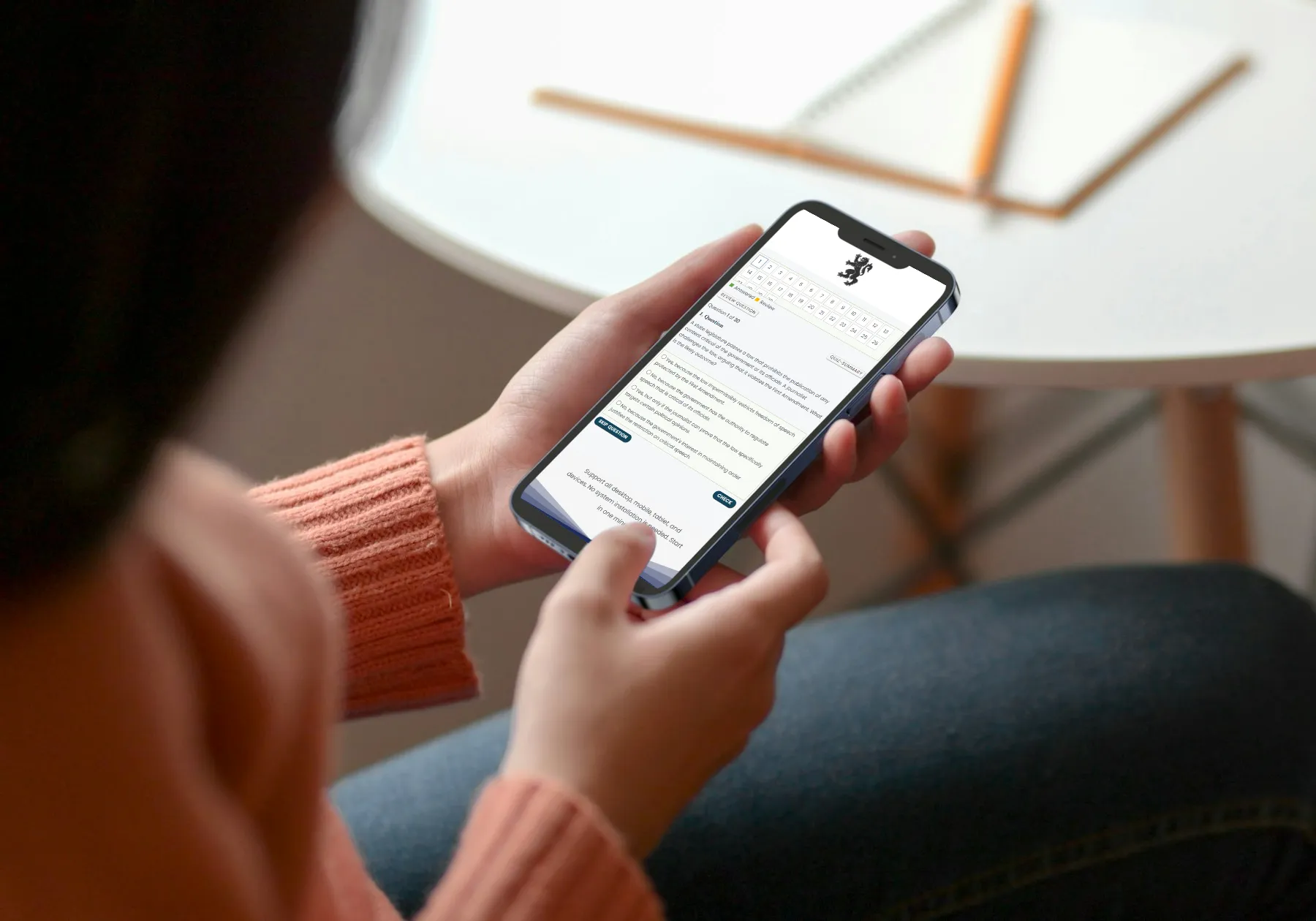
Every practice question, study note, and mind map is carefully crafted to help candidates like you conquer the Scuba Conquer with ease.
Get All Practice Questions
Reinforce your learning with premium video study notes that cover the most critical topics for your Scuba Conquer. Watch, review, and retain — at your own pace.
Get All Study Materials
Scuba Conquer comes with a 100% success guarantee, but we go even further. We don’t just want you to pass; we want you to excel. Picture your colleagues' faces when they see your new professional credential on LinkedIn. Think about how much easier your next promotion will be when you have the certification to back it up.
Here’s our iron-clad promise: if you don’t pass the exam within one year, we’ll extend your full access completely free of charge — no questions asked, no hoops to jump through, and no proof required. Study at your own pace knowing that you’re fully covered.
Whether life got busy, you need extra time to prepare, or you simply want another round of practice — we’ve got you. Your success is our reputation, and we’re putting our money where our mouth is with this unconditional free extension guarantee.
Our practice questions are meticulously designed to replicate the real Scuba Conquer experience. Every question comes with thorough explanations, clarifying why the correct answer is accurate and why the other choices fall short.
Secure instant access once your payment is confirmed. You will promptly receive full access to a wide range of study materials, featuring practice questions, study guides, and detailed answer explanations.
If you do not obtain Scuba Conquer certification after utilizing our platform, we will prolong your access at no additional cost until you succeed, valid for one year from the date of purchase.
Scuba Conquer is crafted to function seamlessly across all devices. Study with ease on smartphones, tablets, iPads, and computers using our flexible platform design.
Our questions mirror the format and challenge of the Scuba Conquer while adhering to ethical guidelines. We respect the copyrights of the official body and create unique content that promotes genuine understanding rather than simple rote learning.
An official invoice will be emailed to you immediately after your purchase. This invoice will contain your contact information, details about the product, the payment amount, and the date of the transaction for your records.
Our past candidates love us. Let's see how they think about our service
Grateful for Scuba Conquer for their exceptional resources. The study materials were thorough and straightforward. Their emphasis on practical examples helped me grasp Scuba Conquer concepts effortlessly.
As a full time professional, Scuba Conquer adaptable study approach was ideal. The mobile application allowed me to study while commuting. Their extensive question bank is impressive.
I used to feel overwhelmed by the Scuba Conquer, but Scuba Conquer turned studying into a manageable and even enjoyable experience. I truly appreciate this resource.
Just completed my Scuba Conquer with the help of Scuba Conquer. The practice questions were tough yet reasonable. The thorough explanations clarified the reasoning behind each response.
Scuba Conquer transformed my preparation into an enjoyable experience. The engaging quizzes and real-world case studies kept my interest high. The performance tracking tools were invaluable.
Preparing for the Scuba Conquer felt daunting until I discovered Scuba Conquer. Their organized strategy and weekly study schedules helped me stay focused. I aced the exam with flying colors.
Join thousands of successful professionals who have enhanced their careers using our platform.
Enable Premium Access