Free Trial Practice Questions

Explore every domain tested on your Scuba Conquer. Expand each section to see the subtopics you need to master.
Covers the physiological and logistical considerations for diving between 18 meters (60 feet) and 30 meters (100 feet).
Focuses on advanced techniques for finding your way underwater using both instruments and environmental clues.
Teaches divers how to optimize their weighting, trim, and breathing to achieve perfect neutral buoyancy.
Explores the specialized equipment, communication, and planning required for safe diving after sunset.
Addresses the unique hazards, techniques, and historical considerations involved in diving on sunken vessels.
Covers the procedures for diving in currents, including specialized entries, exits, and surface support coordination.
Introduces systematic methods to locate lost items underwater and safely bring them to the surface.
Familiarizes divers with different types of dive boats, etiquette, terminology, and safe boat diving practices.
Test your knowledge with these free preview flashcards. Click a card to flip and reveal the answer, then use the arrows to navigate through the deck. Upgrade for the complete flashcard set covering every exam topic.
Get All FlashcardsWhat happens to the appearance of colors as you descend deeper underwater?
Click to flipColors are absorbed by the water, starting with red, followed by orange, yellow, and green.
Memory tip: 'ROY G BIV' - Red disappears first, usually around 15-20 feet.
What is nitrogen narcosis and at what depth does it typically become noticeable?
Click to flipNitrogen narcosis is an intoxicating, anesthetic effect caused by breathing nitrogen under pressure, usually becoming noticeable around 30 meters (100 feet).
The immediate cure for nitrogen narcosis is to safely ascend to a shallower depth.
How do you set a reciprocal (return) heading on an underwater compass?
Click to flipTurn the compass bezel so the index marks are exactly 180 degrees from your initial outbound heading.
The north needle should point to the opposite end of the index marks compared to your outbound swim.
What are three common methods used to measure distance underwater?
Click to flipKick cycles, elapsed time, and tank pressure consumption.
Kick cycles (one complete cycle of both legs) are generally the most reliable method for navigation.
How do you perform a proper pre-dive buoyancy check at the surface?
Click to flipWith an empty BCD and holding a normal breath, you should float at eye level and slowly sink when you exhale.
Always perform this check with all your gear on and your regulator in your mouth.
How do you signal 'OK' using a dive light during a night dive?
Click to flipDraw a slow, horizontal circle with the light beam on the bottom or in the water column.
Never shine your dive light directly into another diver's eyes, as it ruins their night vision.
What is the standard procedure if your primary dive light fails during a night dive?
Click to flipSwitch to your backup light and immediately signal your buddy to end the dive.
Night diving requires a primary light, a backup light, and a marker light (like a tank strobe or glow stick).
How does diving to 30 meters (100 feet) affect your air consumption compared to the surface?
Click to flipYou will consume air four times faster than you do at the surface due to the ambient pressure being 4 ATA.
Boyle's Law: As pressure increases, gas density increases, meaning you breathe more molecules per breath.
What are the three primary hazards associated with wreck diving?
Click to flipEntanglement (nets/lines), sharp objects (rusty metal), and overhead environments (penetration without training).
Always maintain good buoyancy to avoid kicking up silt and reducing visibility around wrecks.
What is a negative buoyancy entry commonly used in drift diving?
Click to flipEntering the water with an empty BCD to immediately descend, avoiding being separated from the group by surface currents.
Ensure your regulator is in your mouth and you are fully ready to equalize before splashing.
Which underwater search pattern is best suited for finding a small object in a large, flat area?
Click to flipThe expanding square pattern or the U-search pattern.
Expanding square is great for small objects when you know the rough drop zone; U-pattern covers larger areas.
Why should you never use your BCD to lift a heavy object to the surface?
Click to flipIf the object drops, your BCD will be overly inflated, causing a dangerous, rapid ascent.
Always use a proper lift bag with a dump valve for recovering heavy items.
What is the difference between Decompression Sickness (DCS) and Lung Overexpansion Injuries?
Click to flipDCS is caused by dissolved nitrogen forming bubbles in tissues, while lung overexpansion is caused by holding your breath during ascent.
Both are forms of Decompression Illness (DCI) and are treated with emergency oxygen.
What is the primary risk of diving with Enriched Air Nitrox (EANx) at depths beyond its Maximum Operating Depth (MOD)?
Click to flipCentral Nervous System (CNS) oxygen toxicity, which can cause sudden underwater convulsions and drowning.
Always analyze your own tank and strictly adhere to the MOD for your specific oxygen percentage.
What is the standard PADI recommendation for a safety stop at the end of every dive?
Click to flipStop at 5 meters (15 feet) for 3 minutes before surfacing.
Safety stops are mandatory if you dive deeper than 30 meters (100 feet) or approach the no-decompression limit.
What is natural navigation?
Click to flipNavigating using environmental clues like sand ripples, depth contours, sun angle, and rock formations rather than a compass.
Sand ripples generally run parallel to the shoreline.
Why must you adjust your dive computer or tables when diving at altitudes above 300 meters (1000 feet)?
Click to flipThe atmospheric pressure at the surface is lower, which increases the pressure gradient during ascent and the risk of decompression sickness.
Many modern dive computers adjust for altitude automatically, but always verify before diving.
How does the type of exposure suit you wear affect your weighting requirements?
Click to flipThicker wetsuits and drysuits are more buoyant, requiring you to carry more lead weight to sink.
Neoprene compresses at depth, meaning you will lose buoyancy as you descend and need to add air to your BCD.
What is the maximum safe ascent rate according to PADI standards?
Click to flip18 meters (60 feet) per minute, though 9 meters (30 feet) per minute is preferred by most modern dive computers.
A good visual rule of thumb is to never ascend faster than your smallest exhaled bubbles.
What is the standard procedure if you lose your buddy underwater?
Click to flipSearch for no more than one minute, then perform a normal ascent to the surface to reunite.
Banging on your tank can help your buddy locate you audibly before you both surface.
You've reached the end of the free preview. Unlock the full deck with all 200+ flashcards covering every exam topic.
Get Premium AccessExplore the interconnected concepts you need to master for your exam. This free preview reveals the breadth of topics covered. Upgrade to unlock the full mind map with every concept, sub-topic, and study pathway mapped out.
Get Full Mind MapMaster your Scuba Conquer with the top study resource on the market
Get All Practice Questions
Gain unrestricted access to practice questions anytime and anywhere you require. Scuba Conquer operates effortlessly across all mobile devices, laptops, and electronic gadgets.
Get All Practice Questions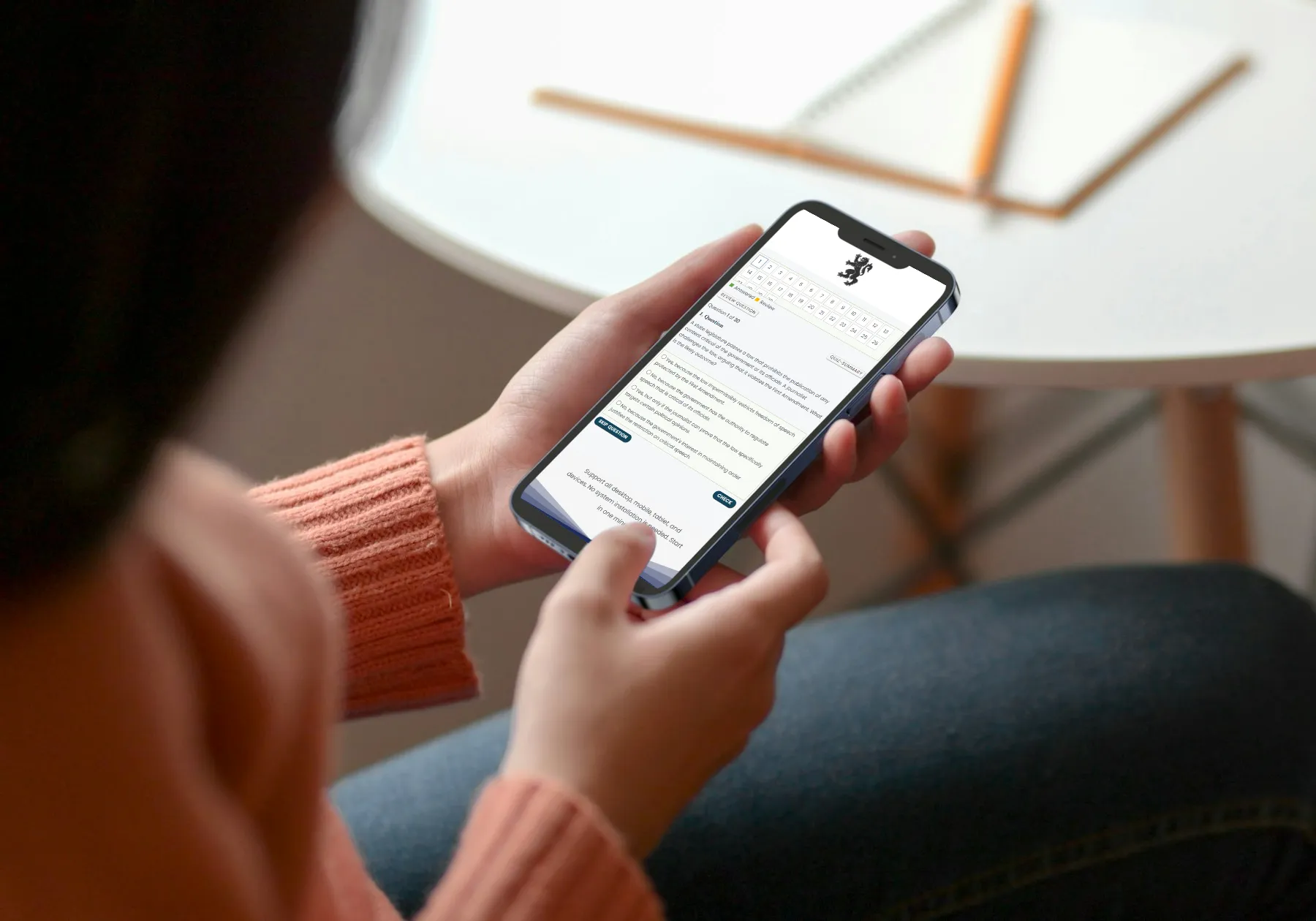
Every practice question, study note, and mind map is carefully crafted to help candidates like you conquer the Scuba Conquer with ease.
Get All Practice Questions
Reinforce your learning with premium video study notes that cover the most critical topics for your Scuba Conquer. Watch, review, and retain — at your own pace.
Get All Study Materials
Scuba Conquer comes with a 100% success guarantee, but we go even further. We don’t just want you to pass; we want you to excel. Picture your colleagues' faces when they see your new professional credential on LinkedIn. Think about how much easier your next promotion will be when you have the certification to back it up.
Here’s our iron-clad promise: if you don’t pass the exam within one year, we’ll extend your full access completely free of charge — no questions asked, no hoops to jump through, and no proof required. Study at your own pace knowing that you’re fully covered.
Whether life got busy, you need extra time to prepare, or you simply want another round of practice — we’ve got you. Your success is our reputation, and we’re putting our money where our mouth is with this unconditional free extension guarantee.
Our practice questions are meticulously designed to replicate the real Scuba Conquer experience. Every question comes with thorough explanations, clarifying why the correct answer is accurate and why the other choices fall short.
Secure instant access once your payment is confirmed. You will promptly receive full access to a wide range of study materials, featuring practice questions, study guides, and detailed answer explanations.
If you do not obtain Scuba Conquer certification after utilizing our platform, we will prolong your access at no additional cost until you succeed, valid for one year from the date of purchase.
Scuba Conquer is crafted to function seamlessly across all devices. Study with ease on smartphones, tablets, iPads, and computers using our flexible platform design.
Our questions mirror the format and challenge of the Scuba Conquer while adhering to ethical guidelines. We respect the copyrights of the official body and create unique content that promotes genuine understanding rather than simple rote learning.
An official invoice will be emailed to you immediately after your purchase. This invoice will contain your contact information, details about the product, the payment amount, and the date of the transaction for your records.
Our past candidates love us. Let's see how they think about our service
Grateful for Scuba Conquer for their exceptional resources. The study materials were thorough and straightforward. Their emphasis on practical examples helped me grasp Scuba Conquer concepts effortlessly.
As a full time professional, Scuba Conquer adaptable study approach was ideal. The mobile application allowed me to study while commuting. Their extensive question bank is impressive.
I used to feel overwhelmed by the Scuba Conquer, but Scuba Conquer turned studying into a manageable and even enjoyable experience. I truly appreciate this resource.
Just completed my Scuba Conquer with the help of Scuba Conquer. The practice questions were tough yet reasonable. The thorough explanations clarified the reasoning behind each response.
Scuba Conquer transformed my preparation into an enjoyable experience. The engaging quizzes and real-world case studies kept my interest high. The performance tracking tools were invaluable.
Preparing for the Scuba Conquer felt daunting until I discovered Scuba Conquer. Their organized strategy and weekly study schedules helped me stay focused. I aced the exam with flying colors.
Join thousands of successful professionals who have enhanced their careers using our platform.
Enable Premium Access