Free Trial Practice Questions

Explore every domain tested on your Scuba Conquer. Expand each section to see the subtopics you need to master.
Understanding the selection, preparation, and use of equipment required for deeper diving, navigation, and surface marking.
Principles of using Nitrox, understanding decompression theory, and planning safe decompression dives.
Essential rescue skills, including bringing an unconscious diver to the surface and managing an emergency scene.
Assessing environmental factors, weather, and tides to ensure safe dive planning and execution.
The responsibilities of a Dive Manager, including risk assessment, site selection, and logistical planning.
In-water application of theory, focusing on buoyancy control, navigation, and simulated decompression.
Test your knowledge with these free preview flashcards. Click a card to flip and reveal the answer, then use the arrows to navigate through the deck. Upgrade for the complete flashcard set covering every exam topic.
Get All FlashcardsWhat is the maximum recommended depth limit for a fully qualified BSAC Sports Diver?
Click to flip35 meters.
Depths beyond the 20-meter Ocean Diver limit should be built up progressively to gain experience.
What does the acronym CBL stand for in BSAC rescue training?
Click to flipControlled Buoyant Lift.
This is a primary rescue technique used to safely bring an incapacitated diver to the surface.
When deploying a Delayed Surface Marker Buoy (DSMB), why should you never attach the reel to your BCD?
Click to flipTo prevent an uncontrolled buoyant ascent if the reel jams.
Always hold the reel in your hands so you can let go immediately if necessary.
At approximately what depth does nitrogen narcosis typically start to significantly affect a diver's judgment and coordination?
Click to flipAround 30 meters.
Often called the 'Martini effect,' its symptoms resolve immediately upon ascending to a shallower depth.
What is the standard maximum ascent rate recommended by BSAC?
Click to flip15 meters per minute up to 6 meters, then taking at least 1 minute to travel from 6 meters to the surface.
Slowing down in the final 6 meters drastically reduces the risk of Decompression Illness (DCI).
What is the absolute first priority immediately upon surfacing an unresponsive casualty?
Click to flipEstablish positive buoyancy for both the rescuer and the casualty.
You cannot effectively open the airway or administer rescue breaths if you are struggling to stay afloat.
What is the maximum partial pressure of oxygen (PO2) recommended by BSAC for normal Nitrox diving?
Click to flip1.4 bar.
While 1.6 bar is the absolute contingency limit, 1.4 bar is the standard operational limit to prevent oxygen toxicity.
In the BSAC decompression tables, what does a 'Current Tissue Code' (CTC) represent?
Click to flipThe amount of residual nitrogen remaining in a diver's tissues after previous dives.
The CTC is essential for calculating safe repetitive dive times.
What is the primary role of a Dive Manager?
Click to flipTo oversee the safety, organization, and execution of the diving operations at the site.
As a Sports Diver, you are trained to assist the Dive Manager and act as an Assistant Dive Manager.
Compare an Alternate Air Source (AAS) ascent to a Controlled Buoyant Lift (CBL).
Click to flipAn AAS ascent involves two conscious divers sharing gas, while a CBL is used by a rescuer to safely lift an incapacitated buddy.
Both are critical rescue skills, but AAS relies on the out-of-gas diver actively participating.
What are the common warning signs of central nervous system (CNS) oxygen toxicity?
Click to flipVisual disturbances, ear ringing, nausea, twitching, irritability, and dizziness (often remembered by the acronym VENTID).
CNS toxicity can lead to sudden underwater convulsions, which is why adhering to Maximum Operating Depth (MOD) is vital.
During a surface rescue, what is the most effective way to alert the surface cover boat while towing a casualty?
Click to flipUse the distress signal by waving one straight arm overhead or blowing loudly on a whistle.
Do this only after buoyancy has been established and the casualty's airway is secured.
What is the primary first-aid treatment for suspected Decompression Illness (DCI) before reaching a medical facility?
Click to flipAdminister 100% oxygen and keep the casualty hydrated and lying flat.
Never put the casualty back in the water in an attempt to recompress them.
Why must a diver personally perform a gas analysis on their Nitrox cylinder before diving?
Click to flipTo confirm the exact oxygen percentage and correctly calculate the cylinder's Maximum Operating Depth (MOD).
You must never rely on someone else's analysis; always analyze and sign for your own gas.
How do cold water or strenuous underwater workloads affect your decompression risk?
Click to flipThey increase the risk of DCI due to altered blood flow and faster nitrogen absorption.
BSAC recommends adding a safety margin, such as using the next deeper or longer table profile.
What is the 'Rule of Thirds' in diving gas management?
Click to flipUse one-third of your gas for the outward journey, one-third for the return, and keep one-third in reserve for emergencies.
This is especially important for dives where direct, vertical access to the surface is restricted.
What is the purpose of a shot line?
Click to flipIt provides a fixed visual reference and physical line connecting a surface buoy directly to the dive site or wreck.
It aids in controlled descents, ascents, and maintaining depth during decompression stops.
What causes a 'squeeze' in a diver's mask during descent, and how is it resolved?
Click to flipIt is caused by increasing ambient pressure compressing the air space, and is resolved by gently exhaling through the nose into the mask.
Failure to equalize the mask can cause severe facial barotrauma and burst blood vessels in the eyes.
When planning a repetitive dive, why is a surface interval required?
Click to flipTo allow the body time to safely off-gas accumulated residual nitrogen before being subjected to pressure again.
Minimum surface intervals are dictated by your dive computer or decompression tables.
What is the BSAC recommended procedure if you lose contact with your buddy underwater?
Click to flipSearch for no more than one minute, then safely ascend to the surface to reunite.
Do not continue the dive alone; both buddies should follow this rule and meet at the surface.
You've reached the end of the free preview. Unlock the full deck with all 200+ flashcards covering every exam topic.
Get Premium AccessExplore the interconnected concepts you need to master for your exam. This free preview reveals the breadth of topics covered. Upgrade to unlock the full mind map with every concept, sub-topic, and study pathway mapped out.
Get Full Mind MapMaster your Scuba Conquer with the top study resource on the market
Get All Practice Questions
Gain unrestricted access to practice questions anytime and anywhere you require. Scuba Conquer operates effortlessly across all mobile devices, laptops, and electronic gadgets.
Get All Practice Questions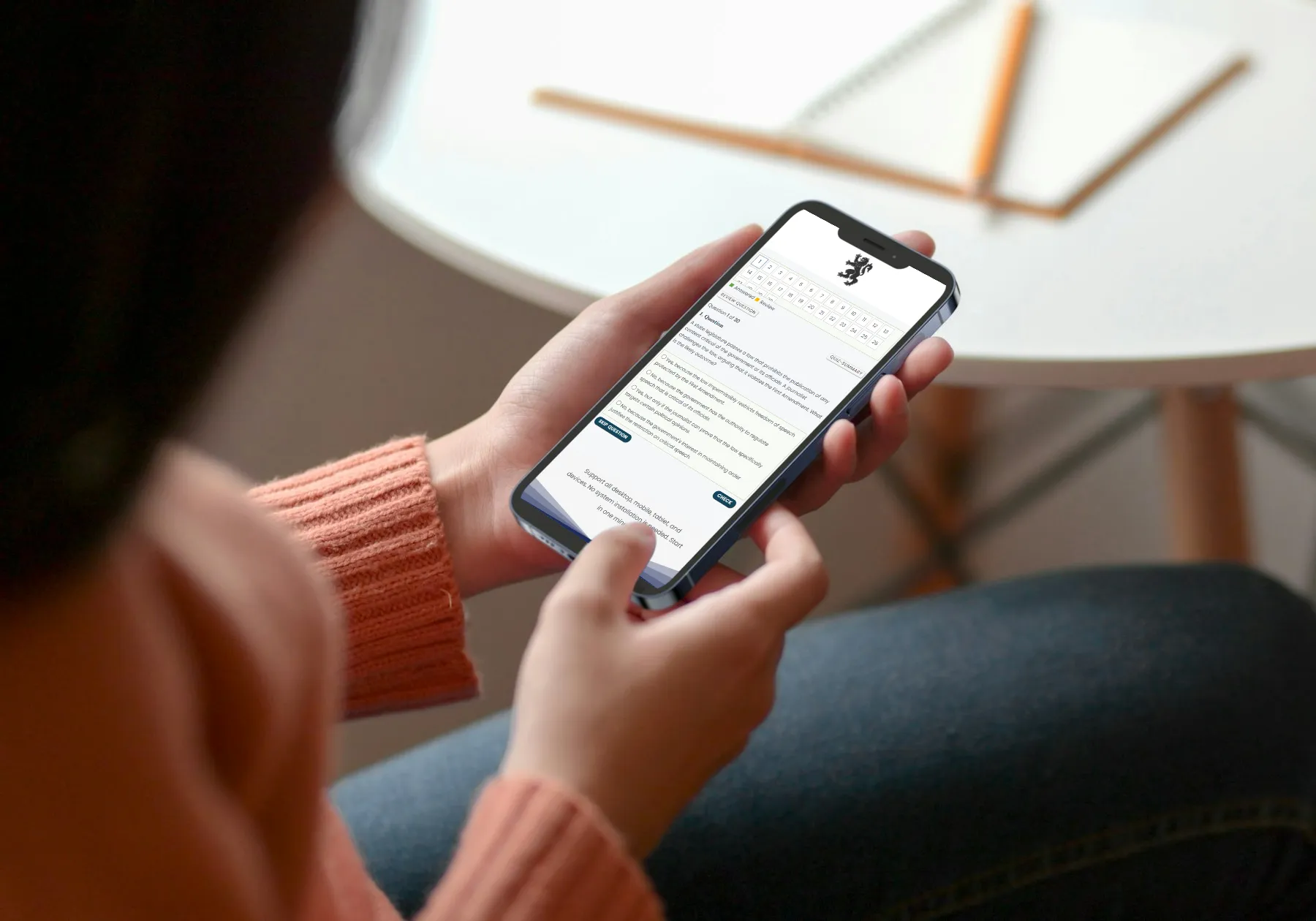
Every practice question, study note, and mind map is carefully crafted to help candidates like you conquer the Scuba Conquer with ease.
Get All Practice Questions
Reinforce your learning with premium video study notes that cover the most critical topics for your Scuba Conquer. Watch, review, and retain — at your own pace.
Get All Study Materials
Scuba Conquer comes with a 100% success guarantee, but we go even further. We don’t just want you to pass; we want you to excel. Picture your colleagues' faces when they see your new professional credential on LinkedIn. Think about how much easier your next promotion will be when you have the certification to back it up.
Here’s our iron-clad promise: if you don’t pass the exam within one year, we’ll extend your full access completely free of charge — no questions asked, no hoops to jump through, and no proof required. Study at your own pace knowing that you’re fully covered.
Whether life got busy, you need extra time to prepare, or you simply want another round of practice — we’ve got you. Your success is our reputation, and we’re putting our money where our mouth is with this unconditional free extension guarantee.
Our practice questions are meticulously designed to replicate the real Scuba Conquer experience. Every question comes with thorough explanations, clarifying why the correct answer is accurate and why the other choices fall short.
Secure instant access once your payment is confirmed. You will promptly receive full access to a wide range of study materials, featuring practice questions, study guides, and detailed answer explanations.
If you do not obtain Scuba Conquer certification after utilizing our platform, we will prolong your access at no additional cost until you succeed, valid for one year from the date of purchase.
Scuba Conquer is crafted to function seamlessly across all devices. Study with ease on smartphones, tablets, iPads, and computers using our flexible platform design.
Our questions mirror the format and challenge of the Scuba Conquer while adhering to ethical guidelines. We respect the copyrights of the official body and create unique content that promotes genuine understanding rather than simple rote learning.
An official invoice will be emailed to you immediately after your purchase. This invoice will contain your contact information, details about the product, the payment amount, and the date of the transaction for your records.
Our past candidates love us. Let's see how they think about our service
Grateful for Scuba Conquer for their exceptional resources. The study materials were thorough and straightforward. Their emphasis on practical examples helped me grasp Scuba Conquer concepts effortlessly.
As a full time professional, Scuba Conquer adaptable study approach was ideal. The mobile application allowed me to study while commuting. Their extensive question bank is impressive.
I used to feel overwhelmed by the Scuba Conquer, but Scuba Conquer turned studying into a manageable and even enjoyable experience. I truly appreciate this resource.
Just completed my Scuba Conquer with the help of Scuba Conquer. The practice questions were tough yet reasonable. The thorough explanations clarified the reasoning behind each response.
Scuba Conquer transformed my preparation into an enjoyable experience. The engaging quizzes and real-world case studies kept my interest high. The performance tracking tools were invaluable.
Preparing for the Scuba Conquer felt daunting until I discovered Scuba Conquer. Their organized strategy and weekly study schedules helped me stay focused. I aced the exam with flying colors.
Join thousands of successful professionals who have enhanced their careers using our platform.
Enable Premium Access