Free Trial Practice Questions
Explore every domain tested on your Scuba Conquer. Expand each section to see the subtopics you need to master.
Covers the professional qualities, responsibilities, and role model behavior expected of a PADI Divemaster.
Focuses on the techniques and procedures for managing and supervising certified divers during recreational dives.
Details the Divemaster's role in assisting PADI Instructors during training courses and confined or open water sessions.
Addresses legal responsibilities, standard safe diving practices, and emergency management protocols.
Outlines the specific PADI programs and courses that an active-status Divemaster is authorized to conduct independently.
Explores the diving industry's business side, customer service, and career progression for dive professionals.
Tests knowledge of how physical laws and properties of water affect divers, equipment, and breathing gases.
Covers the anatomical and physiological effects of diving on the human body, including recognizing medical conditions.
Focuses on the design, function, maintenance, and troubleshooting of modern scuba diving equipment.
Explains the theoretical models of decompression and the practical use of the Recreational Dive Planner (RDP) and eRDPml.
Examines physical oceanography, weather, aquatic life, and environmentally responsible diving practices.
Test your knowledge with these free preview flashcards. Click a card to flip and reveal the answer, then use the arrows to navigate through the deck. Upgrade for the complete flashcard set covering every exam topic.
Get All FlashcardsWhat happens to the volume and density of a flexible gas-filled container as it descends from the surface to 20 meters (66 feet) in saltwater?
Click to flipThe volume decreases to one-third of its original size, and the density increases to three times its original density.
Pressure at 20m/66ft is 3 ATA. According to Boyle's Law, Volume = 1/ATA and Density = ATA.
What is the primary physiological cause of Decompression Sickness (DCS)?
Click to flipDCS is caused by nitrogen bubbles forming in the tissues and bloodstream when a diver ascends too quickly, preventing safe off-gassing.
Remember that DCS is a pressure-related injury explained by Henry's Law.
What is the difference between an unbalanced and a balanced first stage regulator?
Click to flipA balanced first stage delivers air at a consistent pressure regardless of tank pressure or depth, whereas an unbalanced first stage becomes harder to breathe from as tank pressure drops.
Balanced regulators are highly preferred for deep diving and low tank pressures.
In decompression theory, what does the term 'M-value' refer to?
Click to flipThe M-value is the maximum theoretical limit of excess nitrogen (tissue tension) a specific tissue compartment can tolerate without DCS symptoms occurring.
'M' stands for Maximum. Surpassing the M-value significantly increases the risk of DCS.
Which search pattern is most appropriate for finding a small object in a large area with poor visibility over a flat, unobstructed bottom?
Click to flipThe expanding square search pattern.
It ensures systematic coverage without needing a central pivot point like a U-pattern or circular search.
What is the maximum depth limit for a PADI Discover Scuba Diving (DSD) participant making an open water dive?
Click to flipThe maximum depth is 12 meters (40 feet).
This must be conducted under the direct supervision of a PADI Instructor.
What causes spring tides, which result in the highest high tides and lowest low tides?
Click to flipSpring tides occur when the Earth, Moon, and Sun are aligned, combining their gravitational pulls.
This phenomenon happens during the full moon and new moon phases.
What are the two types of oxygen toxicity that divers must be concerned with?
Click to flipCentral Nervous System (CNS) oxygen toxicity and Pulmonary oxygen toxicity.
CNS is caused by high partial pressures of O2 (usually > 1.4 ATA), while Pulmonary is caused by prolonged exposure.
If an object displaces an amount of water that weighs less than the object itself, what will happen to the object?
Click to flipThe object will sink because it is negatively buoyant.
Archimedes' Principle states an object is buoyed up by a force equal to the weight of the water it displaces.
You observe a diver on the surface who is struggling, has their mask on their forehead, and is rejecting their regulator; what is your immediate action?
Click to flipEstablish buoyancy for yourself and the victim by inflating their BCD or dropping their weights.
This is a classic sign of a panicked diver; establishing positive buoyancy is the first step in surface rescues.
As a certified PADI Divemaster, what is your primary role when supervising certified divers?
Click to flipYour primary role is to evaluate dive conditions, brief the divers, and manage the logistical and safety aspects of the dive.
You act as a guide and safety facilitator, not an instructor teaching them new core skills.
Why do objects appear larger and closer underwater?
Click to flipLight refracts (bends) as it passes from the water through the glass of the mask and into the air space, magnifying objects.
Refraction causes objects to appear 33% larger and 25% closer.
What is a 'reverse block' and when does it typically occur?
Click to flipA reverse block is pain or discomfort caused by expanding air trapped in the middle ear or sinuses during ascent.
Never force an ascent; if a reverse block occurs, descend slightly, swallow, and ascend very slowly.
What does the term 'tissue half-time' mean in dive computing?
Click to flipIt is the time required for a specific tissue compartment to absorb or release gas until it reaches 50% of the pressure difference between the tissue and the inspired gas.
Fast tissues (like blood) have short half-times, while slow tissues (like bone) have long half-times.
What is the primary difference between a DIN and a Yoke cylinder valve?
Click to flipA DIN regulator screws directly into the cylinder valve, providing a more secure, high-pressure seal, whereas a Yoke regulator clamps over the valve.
DIN valves are generally preferred for technical and cold-water diving due to their higher pressure rating.
Which PADI program can a Divemaster conduct independently to refresh the skills of a certified diver?
Click to flipThe PADI ReActivate program.
This program refreshes basic scuba skills and updates the diver's certification card with a new date.
When planning a dive in a mild current, how should you structure the dive path?
Click to flipBegin the dive by swimming into the current so that the return trip to the exit point is assisted by the current.
This conserves energy and air for the end of the dive when divers are more tired.
What causes shallow water blackout in freedivers?
Click to flipHyperventilation before a dive artificially lowers carbon dioxide levels, delaying the urge to breathe until oxygen levels drop too low to sustain consciousness during ascent.
CO2 is the primary physiological trigger for the urge to breathe, not a lack of O2.
If a diver goes missing during a group dive, what is the maximum time the group should search underwater before surfacing?
Click to flipThe group should search for no more than one minute before surfacing to look for the missing diver.
If the missing diver is not on the surface, emergency recall and search procedures should be initiated immediately.
How much faster does water conduct heat away from the body compared to air?
Click to flipWater conducts heat away from the body approximately 20 times faster than air.
This rapid heat loss is why thermal protection (wetsuits/drysuits) is essential even in relatively warm water.
You've reached the end of the free preview. Unlock the full deck with all 200+ flashcards covering every exam topic.
Get Premium AccessExplore the interconnected concepts you need to master for your exam. This free preview reveals the breadth of topics covered. Upgrade to unlock the full mind map with every concept, sub-topic, and study pathway mapped out.
Get Full Mind MapMaster your Scuba Conquer with the top study resource on the market
Get All Practice Questions
Gain unrestricted access to practice questions anytime and anywhere you require. Scuba Conquer operates effortlessly across all mobile devices, laptops, and electronic gadgets.
Get All Practice Questions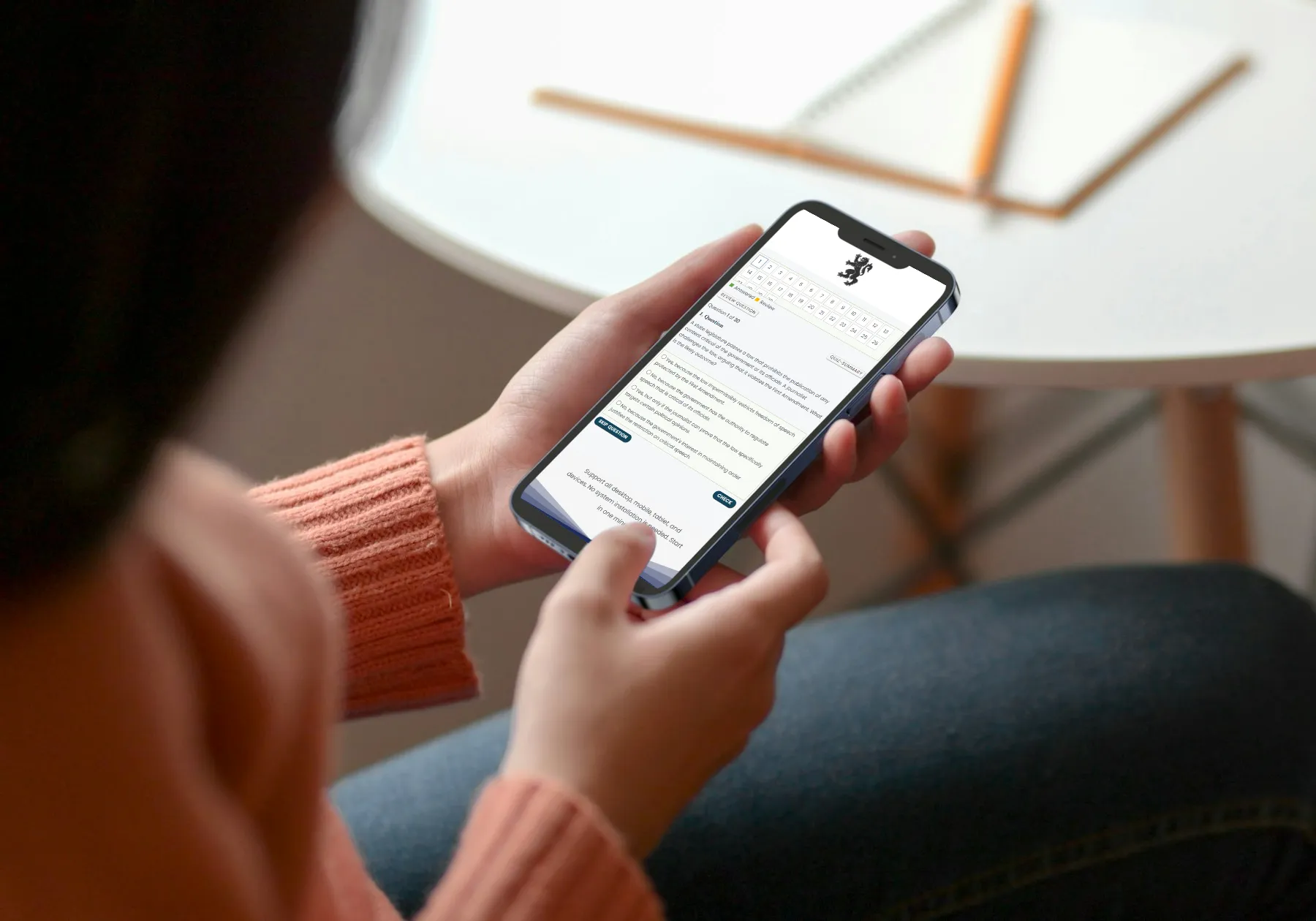
Every practice question, study note, and mind map is carefully crafted to help candidates like you conquer the Scuba Conquer with ease.
Get All Practice Questions
Reinforce your learning with premium video study notes that cover the most critical topics for your Scuba Conquer. Watch, review, and retain — at your own pace.
Get All Study Materials
Scuba Conquer comes with a 100% success guarantee, but we go even further. We don’t just want you to pass; we want you to excel. Picture your colleagues' faces when they see your new professional credential on LinkedIn. Think about how much easier your next promotion will be when you have the certification to back it up.
Here’s our iron-clad promise: if you don’t pass the exam within one year, we’ll extend your full access completely free of charge — no questions asked, no hoops to jump through, and no proof required. Study at your own pace knowing that you’re fully covered.
Whether life got busy, you need extra time to prepare, or you simply want another round of practice — we’ve got you. Your success is our reputation, and we’re putting our money where our mouth is with this unconditional free extension guarantee.
Our practice questions are meticulously designed to replicate the real Scuba Conquer experience. Every question comes with thorough explanations, clarifying why the correct answer is accurate and why the other choices fall short.
Secure instant access once your payment is confirmed. You will promptly receive full access to a wide range of study materials, featuring practice questions, study guides, and detailed answer explanations.
If you do not obtain Scuba Conquer certification after utilizing our platform, we will prolong your access at no additional cost until you succeed, valid for one year from the date of purchase.
Scuba Conquer is crafted to function seamlessly across all devices. Study with ease on smartphones, tablets, iPads, and computers using our flexible platform design.
Our questions mirror the format and challenge of the Scuba Conquer while adhering to ethical guidelines. We respect the copyrights of the official body and create unique content that promotes genuine understanding rather than simple rote learning.
An official invoice will be emailed to you immediately after your purchase. This invoice will contain your contact information, details about the product, the payment amount, and the date of the transaction for your records.
Our past candidates love us. Let's see how they think about our service
Grateful for Scuba Conquer for their exceptional resources. The study materials were thorough and straightforward. Their emphasis on practical examples helped me grasp Scuba Conquer concepts effortlessly.
As a full time professional, Scuba Conquer adaptable study approach was ideal. The mobile application allowed me to study while commuting. Their extensive question bank is impressive.
I used to feel overwhelmed by the Scuba Conquer, but Scuba Conquer turned studying into a manageable and even enjoyable experience. I truly appreciate this resource.
Just completed my Scuba Conquer with the help of Scuba Conquer. The practice questions were tough yet reasonable. The thorough explanations clarified the reasoning behind each response.
Scuba Conquer transformed my preparation into an enjoyable experience. The engaging quizzes and real-world case studies kept my interest high. The performance tracking tools were invaluable.
Preparing for the Scuba Conquer felt daunting until I discovered Scuba Conquer. Their organized strategy and weekly study schedules helped me stay focused. I aced the exam with flying colors.
Join thousands of successful professionals who have enhanced their careers using our platform.
Enable Premium Access