Attain Excellence with Scuba Conquer
Get All Practice Questions
Free Trial Practice Questions

Explore every domain tested on your Scuba Conquer. Expand each section to see the subtopics you need to master.
Understanding and applying PADI standards, navigating the Instructor Manual, and adhering to general training requirements.
Principles of water pressure, buoyancy, gases, and the physiological effects of diving on the human body.
Scuba equipment function, maintenance, and the physical characteristics of the marine and freshwater environments.
Mastery of dive tables and electronic dive planners for single, repetitive, and multilevel dive planning.
Structuring and delivering effective classroom presentations using the PADI educational system.
Organizing, briefing, evaluating, and debriefing scuba skills in a pool or confined water environment.
Managing students, evaluating skills, and ensuring safety in an open water training environment.
Instructor responsibilities, legal considerations, risk mitigation, and demonstrating rescue readiness.
Test your knowledge with these free preview flashcards. Click a card to flip and reveal the answer, then use the arrows to navigate through the deck. Upgrade for the complete flashcard set covering every exam topic.
Get All FlashcardsWhat is the maximum student-to-instructor ratio for an Open Water Diver confined water dive?
Click to flipThe maximum ratio is 10:1, with an additional 4 students allowed per certified assistant.
Ratios must be evaluated and potentially reduced based on environmental conditions and student abilities.
How much does a cubic foot of salt water weigh compared to fresh water?
Click to flipA cubic foot of salt water weighs 64 pounds, while fresh water weighs 62.4 pounds.
This density difference is why divers need more weight in the ocean than in a lake.
What is the primary physiological cause of decompression sickness (DCS)?
Click to flipDCS is caused by dissolved nitrogen coming out of solution and forming bubbles in the body's tissues and bloodstream when a diver ascends too quickly.
These bubbles can block blood flow and press on nerves, leading to joint pain, numbness, or paralysis.
What are the two primary components of a PADI Knowledge Development teaching presentation?
Click to flipInstructors must include a Contact (introduction) and a specific Objective, followed by the Body, and ending with a Summary/Close.
PADI heavily emphasizes prescriptive teaching, focusing only on what students missed in their independent study.
What is the primary purpose of an environmental seal on a first stage regulator?
Click to flipIt prevents water, salt, and debris from entering the ambient pressure chamber of the first stage.
This is essential for cold water and ice diving to prevent the regulator from freezing and free-flowing.
According to the Recreational Dive Planner (RDP), what is the absolute maximum ascent rate?
Click to flipThe maximum ascent rate is 18 meters (60 feet) per minute.
Although 18m/min is the maximum, ascending slower (e.g., 9m/30ft per minute) is highly encouraged by modern dive computers.
At what age can a child earn the PADI Junior Open Water Diver certification?
Click to flipA child must be at least 10 years old to earn the Junior Open Water certification.
10- and 11-year-olds are restricted to a maximum depth of 12 meters (40 feet) and must dive with a parent, guardian, or PADI Professional.
If a student diver panics and struggles to clear their mask in confined water, what should you do first?
Click to flipStop the skill, calm the student down, and break the skill into smaller, manageable steps like breathing without the mask on.
Emphasize looking down and breathing out continuously through the nose to build confidence.
What are the primary signs of Central Nervous System (CNS) oxygen toxicity?
Click to flipThe signs include visual disturbances, ear ringing, nausea, twitching, irritability, and dizziness (remembered by the acronym VENTID).
CNS toxicity is a major risk of diving with Enriched Air Nitrox beyond its maximum operating depth (MOD).
If a flexible balloon is filled with 2 liters of air at 20 meters (66 feet), what will its volume be at the surface?
Click to flipThe volume will expand to 6 liters at the surface.
Pressure at 20m is 3 ATA. According to Boyle's Law, 2 liters x 3 ATA = 6 liters at 1 ATA (the surface).
What is the difference between a normal ascent and a Controlled Emergency Swimming Ascent (CESA)?
Click to flipA normal ascent relies on breathing continuously from a regulator, while a CESA is an out-of-air emergency ascent where the diver continuously exhales while swimming to the surface.
CESA is generally only recommended for depths of 9 meters (30 feet) or shallower.
How do tidal currents generally affect local dive conditions?
Click to flipTidal currents can cause rapid changes in visibility, strong water movement, and sudden shifts in water temperature.
The best and safest time to dive in tidal areas is typically during 'slack tide' when water movement is minimal.
What is the minimum prerequisite diving certification required to enroll in the PADI Rescue Diver course?
Click to flipThe diver must hold a PADI Adventure Diver certification and have completed the Underwater Navigation Adventure Dive.
Current CPR and First Aid training (like EFR) completed within the last 24 months is also required before certification.
What physiological change happens to a diver due to the mammalian diving reflex?
Click to flipThe diver's heart rate slows down (bradycardia) when their face is suddenly submerged in cold water.
This reflex helps conserve oxygen and is more pronounced in freedivers than in scuba divers.
According to PADI standards, under what three conditions is a safety stop strictly required?
Click to flipA safety stop is required for dives to 30 meters (100 feet) or deeper, if the diver comes within 3 pressure groups of a NDL, or if they reach any NDL limit.
Even when not required, a 3-minute safety stop at 5 meters (15 feet) is highly recommended for all dives.
In the PADI teaching system, what does the acronym DSD stand for?
Click to flipDSD stands for Discover Scuba Diving.
It is an introductory, closely supervised experience for uncertified individuals, not a certification course.
How does a balanced regulator differ from an unbalanced regulator?
Click to flipA balanced regulator provides consistent airflow regardless of tank pressure or depth, whereas an unbalanced regulator becomes harder to breathe from as tank pressure drops.
Balanced regulators are heavily preferred for deep diving and high-performance situations.
Why do objects appear larger and closer underwater?
Click to flipLight rays refract (bend) as they pass from the denser water through the glass of the dive mask and into the air space inside the mask.
Due to refraction, objects appear about 25% larger and 33% closer than they actually are.
If you suspect a surfaced diver has an arterial gas embolism (AGE), what is the immediate first aid response?
Click to flipAdminister emergency oxygen, keep the patient lying down (supine), monitor their airway, and arrange for immediate emergency medical evacuation.
Never put a diver with suspected lung overexpansion injuries back in the water for in-water recompression.
What is the absolute maximum depth limit for a PADI Deep Diver specialty course dive?
Click to flipThe maximum depth limit is 40 meters (130 feet).
This is the absolute maximum depth limit for all recreational, non-technical scuba diving.
You've reached the end of the free preview. Unlock the full deck with all 200+ flashcards covering every exam topic.
Get Premium AccessExplore the interconnected concepts you need to master for your exam. This free preview reveals the breadth of topics covered. Upgrade to unlock the full mind map with every concept, sub-topic, and study pathway mapped out.
Get Full Mind MapMaster your Scuba Conquer with the top study resource on the market
Get All Practice Questions
Gain unrestricted access to practice questions anytime and anywhere you require. Scuba Conquer operates effortlessly across all mobile devices, laptops, and electronic gadgets.
Get All Practice Questions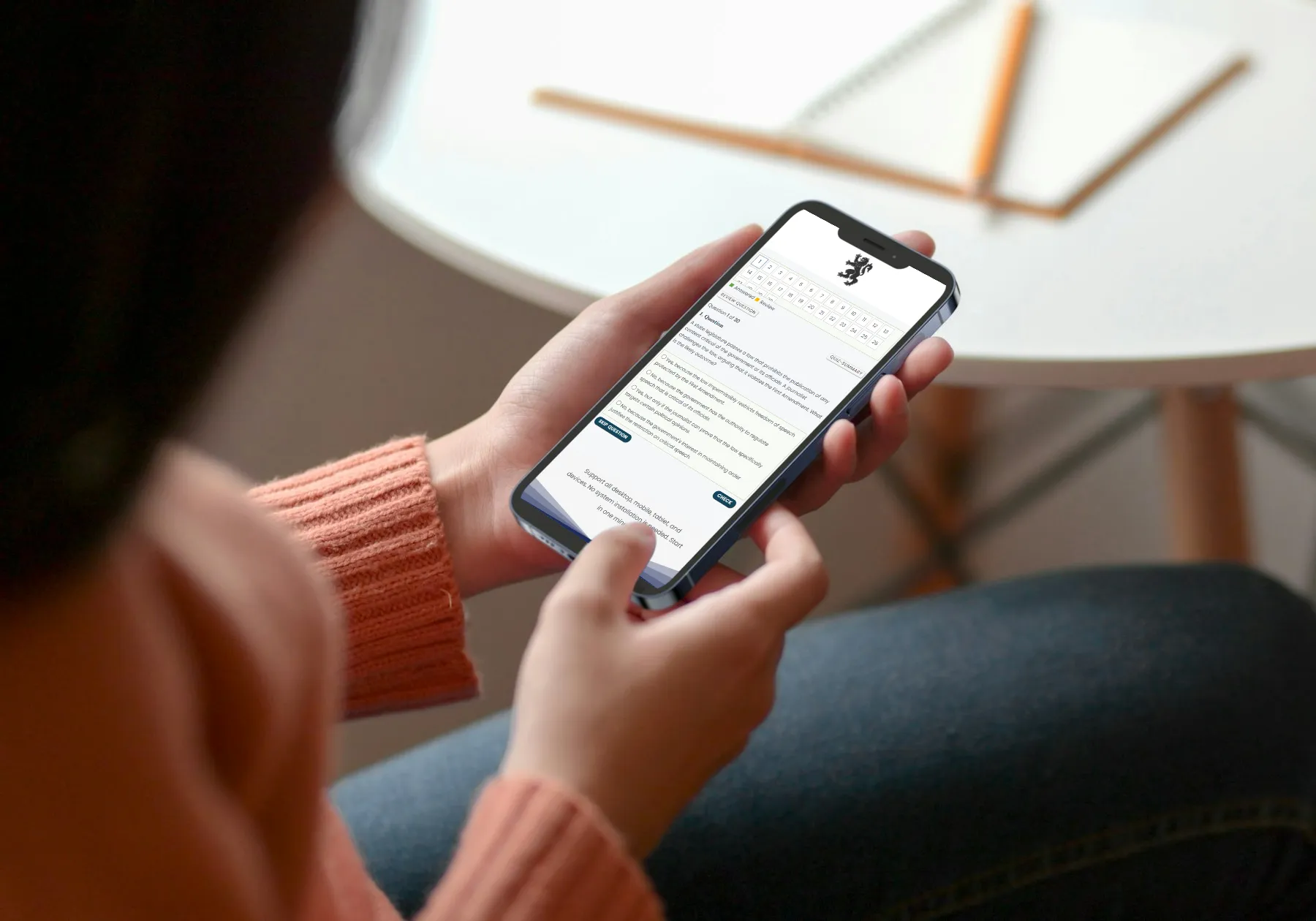
Every practice question, study note, and mind map is carefully crafted to help candidates like you conquer the Scuba Conquer with ease.
Get All Practice Questions
Reinforce your learning with premium video study notes that cover the most critical topics for your Scuba Conquer. Watch, review, and retain — at your own pace.
Get All Study Materials
Scuba Conquer comes with a 100% success guarantee, but we go even further. We don’t just want you to pass; we want you to excel. Picture your colleagues' faces when they see your new professional credential on LinkedIn. Think about how much easier your next promotion will be when you have the certification to back it up.
Here’s our iron-clad promise: if you don’t pass the exam within one year, we’ll extend your full access completely free of charge — no questions asked, no hoops to jump through, and no proof required. Study at your own pace knowing that you’re fully covered.
Whether life got busy, you need extra time to prepare, or you simply want another round of practice — we’ve got you. Your success is our reputation, and we’re putting our money where our mouth is with this unconditional free extension guarantee.
Our practice questions are meticulously designed to replicate the real Scuba Conquer experience. Every question comes with thorough explanations, clarifying why the correct answer is accurate and why the other choices fall short.
Secure instant access once your payment is confirmed. You will promptly receive full access to a wide range of study materials, featuring practice questions, study guides, and detailed answer explanations.
If you do not obtain Scuba Conquer certification after utilizing our platform, we will prolong your access at no additional cost until you succeed, valid for one year from the date of purchase.
Scuba Conquer is crafted to function seamlessly across all devices. Study with ease on smartphones, tablets, iPads, and computers using our flexible platform design.
Our questions mirror the format and challenge of the Scuba Conquer while adhering to ethical guidelines. We respect the copyrights of the official body and create unique content that promotes genuine understanding rather than simple rote learning.
An official invoice will be emailed to you immediately after your purchase. This invoice will contain your contact information, details about the product, the payment amount, and the date of the transaction for your records.
Our past candidates love us. Let's see how they think about our service
Grateful for Scuba Conquer for their exceptional resources. The study materials were thorough and straightforward. Their emphasis on practical examples helped me grasp Scuba Conquer concepts effortlessly.
As a full time professional, Scuba Conquer adaptable study approach was ideal. The mobile application allowed me to study while commuting. Their extensive question bank is impressive.
I used to feel overwhelmed by the Scuba Conquer, but Scuba Conquer turned studying into a manageable and even enjoyable experience. I truly appreciate this resource.
Just completed my Scuba Conquer with the help of Scuba Conquer. The practice questions were tough yet reasonable. The thorough explanations clarified the reasoning behind each response.
Scuba Conquer transformed my preparation into an enjoyable experience. The engaging quizzes and real-world case studies kept my interest high. The performance tracking tools were invaluable.
Preparing for the Scuba Conquer felt daunting until I discovered Scuba Conquer. Their organized strategy and weekly study schedules helped me stay focused. I aced the exam with flying colors.
Join thousands of successful professionals who have enhanced their careers using our platform.
Enable Premium Access