Free Trial Practice Questions

Explore every domain tested on your Scuba Conquer. Expand each section to see the subtopics you need to master.
Understanding the official NAUI rules, course standards, and administrative procedures required to teach and certify divers.
Application of physical laws to the underwater environment, including pressure, gas laws, buoyancy, and acoustics.
The effects of pressure and diving environments on the human body, including prevention and recognition of diving maladies.
Design, function, and maintenance of scuba diving gear and related life-support equipment.
Understanding tissue compartments, half-times, the NAUI RGBM dive tables, and modern dive computer algorithms.
Knowledge of the aquatic environment, weather patterns, water movement, and marine life interactions.
Principles of self-rescue, diver assistance, emergency management, and first aid application.
Techniques for delivering effective classroom presentations, creating lesson plans, and assessing student knowledge.
Methods for demonstrating skills, organizing pool sessions, and ensuring student safety in confined water.
Strategies for managing student divers in open water, conducting evaluations, and environmental risk assessment.
Test your knowledge with these free preview flashcards. Click a card to flip and reveal the answer, then use the arrows to navigate through the deck. Upgrade for the complete flashcard set covering every exam topic.
Get All FlashcardsWhat is the core philosophy of NAUI regarding instructional freedom?
Click to flipNAUI promotes 'Academic Freedom,' allowing instructors to adapt their teaching methods and course sequencing to meet the specific needs of their students.
As long as NAUI standards are met, the instructor has the flexibility to tailor the delivery for optimal learning.
Which gas law explains why a diver's air consumption rate increases as depth increases?
Click to flipBoyle's Law.
As pressure increases with depth, gas volume decreases, meaning a diver requires more air molecules to fill their lungs per breath.
What is the primary physiological cause of Decompression Sickness (DCS)?
Click to flipThe formation of nitrogen gas bubbles in the body's tissues and bloodstream due to a rapid decrease in ambient pressure.
Often caused by ascending too quickly or omitting required decompression stops.
What is the maximum student-to-instructor ratio for a NAUI Scuba Diver open water dive under ideal conditions?
Click to flipThe maximum ratio is 8 students to 1 active NAUI Instructor.
This ratio must be reduced in less than ideal environmental conditions or visibility.
What is the official NAUI motto regarding dive safety and education?
Click to flip'Dive Safety Through Education.'
This emphasizes the NAUI belief that thorough, high-quality training is the best way to prevent diving accidents.
How does heat loss in water compare to heat loss in air of the same temperature?
Click to flipWater conducts heat away from the body approximately 20 to 25 times faster than air.
This makes proper thermal protection critical even in seemingly warm tropical waters.
What does RGBM stand for in NAUI dive tables and computers?
Click to flipReduced Gradient Bubble Model.
RGBM is a decompression algorithm that accounts for micro-bubbles in the bloodstream, emphasizing safety stops and slower ascent rates.
In an out-of-air scenario where a buddy is unreachable, what is the preferred NAUI emergency ascent method?
Click to flipThe Emergency Swimming Ascent (ESA).
The diver swims continuously to the surface at a safe rate while slowly exhaling to prevent lung overexpansion injuries.
What is the difference between a balanced and an unbalanced first-stage regulator?
Click to flipA balanced first stage delivers air at a consistent intermediate pressure regardless of tank pressure, whereas an unbalanced first stage becomes harder to breathe from as tank pressure drops.
Balanced regulators are heavily preferred for deep diving and low-tank-pressure situations.
What is the minimum age requirement to earn the NAUI Junior Scuba Diver certification?
Click to flipThe minimum age is 10 years old.
10 to 14-year-olds earn the Junior certification, which automatically upgrades to standard Scuba Diver at age 15.
What is the most common type of barotrauma experienced by scuba divers?
Click to flipMiddle ear squeeze (Middle Ear Barotrauma).
It occurs on descent when a diver fails to equalize the pressure in their middle ear with the increasing ambient pressure.
What is the first physical action an instructor should take when rescuing an active panicked diver at the surface?
Click to flipEstablish positive buoyancy for both the victim and the rescuer.
Dropping the victim's weights or inflating their BCD usually stops the frantic struggle to stay afloat.
Why do objects appear larger and closer underwater?
Click to flipRefraction causes light rays to bend as they pass from the water, through the flat glass of the dive mask, and into the air space.
Objects typically appear 25% larger and 33% closer than they actually are.
What does a hydrostatic test on a scuba cylinder evaluate?
Click to flipIt tests the structural integrity and elasticity of the metal cylinder by measuring its expansion under high water pressure.
In the United States, this test is required every 5 years for scuba cylinders.
What is the typical NAUI sequence for teaching a new motor skill in confined water?
Click to flipBriefing, Instructor Demonstration, Student Practice, and Debriefing/Correction.
Demonstrations should be slow, exaggerated, and clearly visible to all students.
At what approximate depth do most divers begin to experience the noticeable effects of nitrogen narcosis?
Click to flipApproximately 100 feet (30 meters) of seawater.
Also known as 'rapture of the deep,' the effects act similarly to alcohol intoxication and resolve upon ascending.
What causes the phenomenon known as a 'spring tide'?
Click to flipThe alignment of the Earth, Moon, and Sun, which combines their gravitational pulls to create the highest high tides and lowest low tides.
Spring tides occur during the full moon and new moon phases.
How does Archimedes' Principle apply to a diver's buoyancy?
Click to flipAn object wholly or partially immersed in a fluid is buoyed up by a force equal to the weight of the fluid displaced.
To achieve neutral buoyancy, a diver must displace a volume of water equal to their exact total weight.
What NAUI certification level must an individual hold to assist an active NAUI Instructor with open water training?
Click to flipNAUI Divemaster or NAUI Assistant Instructor.
They must be in active status and have current insurance to legally assist with students.
What are the essential components of a proper NAUI dive briefing?
Click to flipDive site description, dive objectives, entry/exit methods, depth/time limits, emergency procedures, and buddy assignments.
SEABAG is a common acronym used to remember this: Site, Environment, Activity, Buoyancy, Air, Gear.
You've reached the end of the free preview. Unlock the full deck with all 200+ flashcards covering every exam topic.
Get Premium AccessExplore the interconnected concepts you need to master for your exam. This free preview reveals the breadth of topics covered. Upgrade to unlock the full mind map with every concept, sub-topic, and study pathway mapped out.
Get Full Mind MapMaster your Scuba Conquer with the top study resource on the market
Get All Practice Questions
Gain unrestricted access to practice questions anytime and anywhere you require. Scuba Conquer operates effortlessly across all mobile devices, laptops, and electronic gadgets.
Get All Practice Questions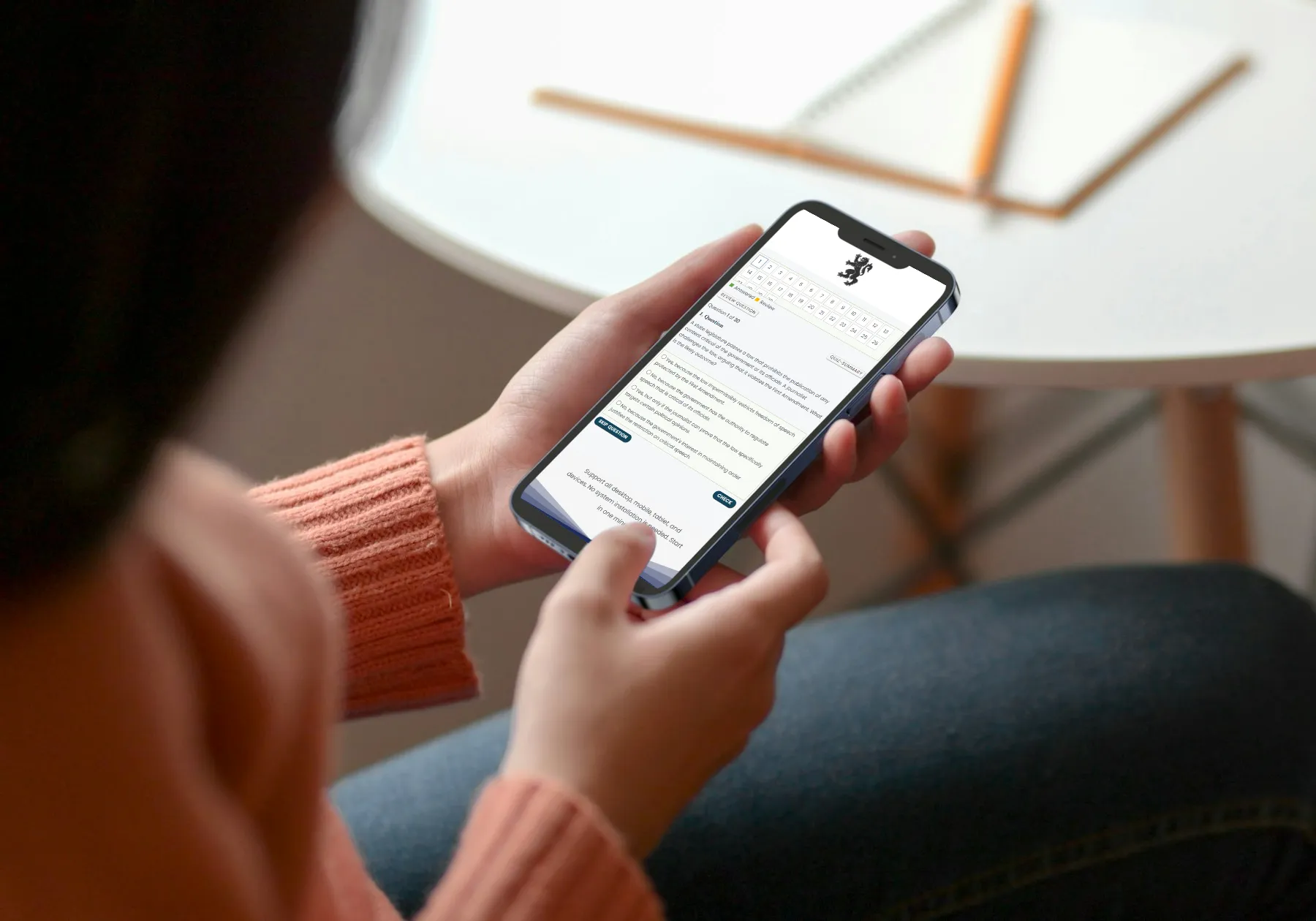
Every practice question, study note, and mind map is carefully crafted to help candidates like you conquer the Scuba Conquer with ease.
Get All Practice Questions
Reinforce your learning with premium video study notes that cover the most critical topics for your Scuba Conquer. Watch, review, and retain — at your own pace.
Get All Study Materials
Scuba Conquer comes with a 100% success guarantee, but we go even further. We don’t just want you to pass; we want you to excel. Picture your colleagues' faces when they see your new professional credential on LinkedIn. Think about how much easier your next promotion will be when you have the certification to back it up.
Here’s our iron-clad promise: if you don’t pass the exam within one year, we’ll extend your full access completely free of charge — no questions asked, no hoops to jump through, and no proof required. Study at your own pace knowing that you’re fully covered.
Whether life got busy, you need extra time to prepare, or you simply want another round of practice — we’ve got you. Your success is our reputation, and we’re putting our money where our mouth is with this unconditional free extension guarantee.
Our practice questions are meticulously designed to replicate the real Scuba Conquer experience. Every question comes with thorough explanations, clarifying why the correct answer is accurate and why the other choices fall short.
Secure instant access once your payment is confirmed. You will promptly receive full access to a wide range of study materials, featuring practice questions, study guides, and detailed answer explanations.
If you do not obtain Scuba Conquer certification after utilizing our platform, we will prolong your access at no additional cost until you succeed, valid for one year from the date of purchase.
Scuba Conquer is crafted to function seamlessly across all devices. Study with ease on smartphones, tablets, iPads, and computers using our flexible platform design.
Our questions mirror the format and challenge of the Scuba Conquer while adhering to ethical guidelines. We respect the copyrights of the official body and create unique content that promotes genuine understanding rather than simple rote learning.
An official invoice will be emailed to you immediately after your purchase. This invoice will contain your contact information, details about the product, the payment amount, and the date of the transaction for your records.
Our past candidates love us. Let's see how they think about our service
Grateful for Scuba Conquer for their exceptional resources. The study materials were thorough and straightforward. Their emphasis on practical examples helped me grasp Scuba Conquer concepts effortlessly.
As a full time professional, Scuba Conquer adaptable study approach was ideal. The mobile application allowed me to study while commuting. Their extensive question bank is impressive.
I used to feel overwhelmed by the Scuba Conquer, but Scuba Conquer turned studying into a manageable and even enjoyable experience. I truly appreciate this resource.
Just completed my Scuba Conquer with the help of Scuba Conquer. The practice questions were tough yet reasonable. The thorough explanations clarified the reasoning behind each response.
Scuba Conquer transformed my preparation into an enjoyable experience. The engaging quizzes and real-world case studies kept my interest high. The performance tracking tools were invaluable.
Preparing for the Scuba Conquer felt daunting until I discovered Scuba Conquer. Their organized strategy and weekly study schedules helped me stay focused. I aced the exam with flying colors.
Join thousands of successful professionals who have enhanced their careers using our platform.
Enable Premium Access